




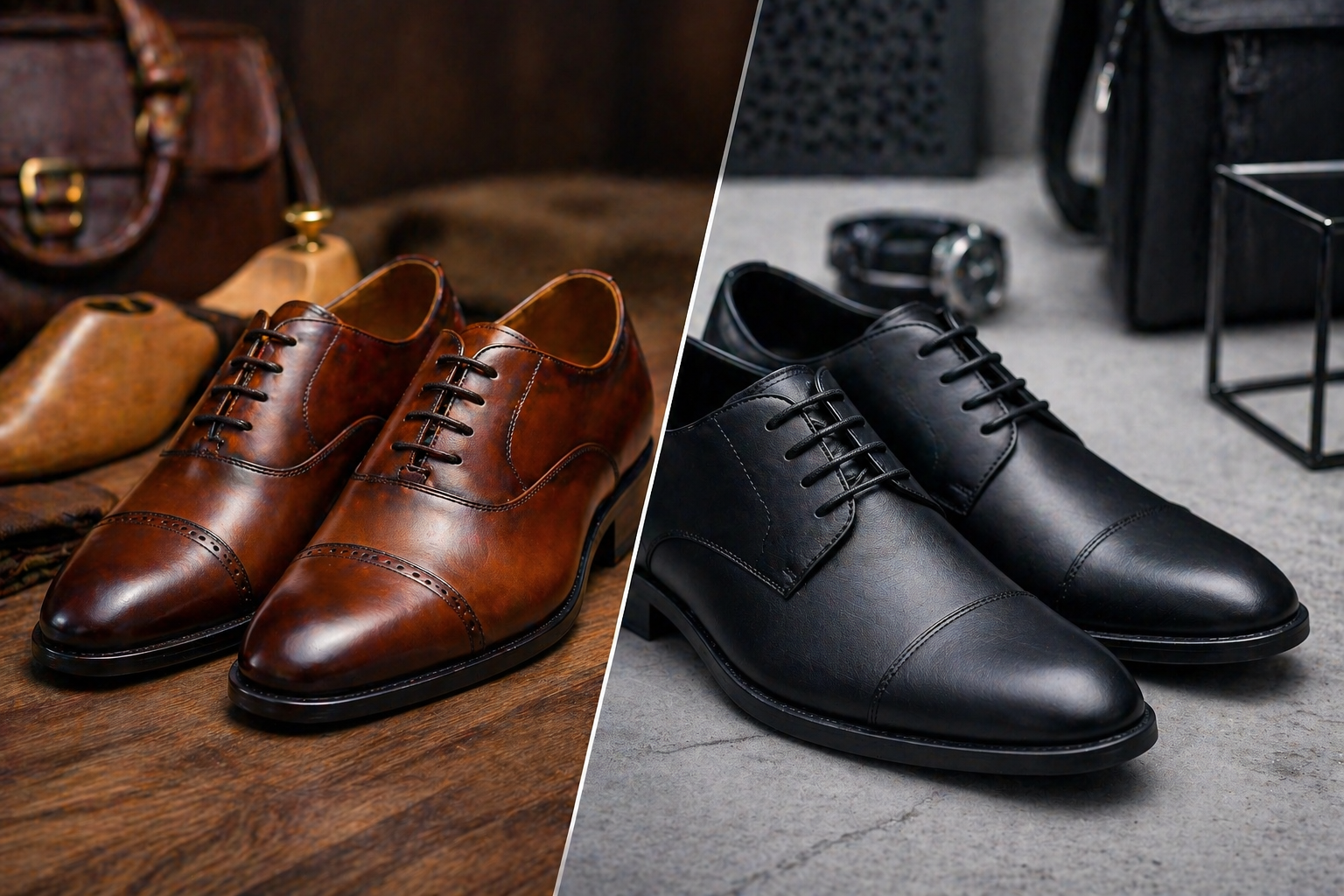
When it comes to buying shoes, one question always comes up: Leather shoes vs synthetic—what’s actually better?
At first glance, both can look similar. But when you consider comfort, durability, style, and long-term value, the differences become clear. Choosing the wrong material can lead to discomfort, faster wear, and wasted money.
In this Leather Shoes vs Synthetic: Real Comparison Guide, we’ll break down everything you need to know—so you can make a smart, confident purchase.
🧠 Why Material Matters in Footwear
The material of your shoes affects:
- Comfort throughout the day
- Breathability and foot health
- Durability and lifespan
- Overall appearance and style
👉 The right choice depends on your lifestyle and how you plan to use your shoes.
👞 What Are Leather Shoes?
Leather shoes are made from natural animal hide, processed to create a durable and flexible material.
✅ Pros of Leather Shoes
1. Premium Look and Feel
Leather has a rich, natural texture that instantly looks more expensive.
2. High Durability
With proper care, leather shoes can last years, not months.
3. Breathability
Leather allows air circulation, reducing sweat and odor.
4. Comfort Over Time
Leather molds to your feet, creating a custom fit.
❌ Cons of Leather Shoes
- Higher upfront cost
- Requires maintenance (polishing, conditioning)
- Not fully waterproof unless treated
💡 Real-Life Use Case
Perfect for:
- Office wear
- Formal events
- Long-term use
👉 Ideal if you want quality and longevity
👟 What Are Synthetic Shoes?
Synthetic shoes are made from man-made materials like polyurethane (PU), rubber, or mesh.
✅ Pros of Synthetic Shoes
1. Budget-Friendly
Much cheaper than leather alternatives.
2. Lightweight
Great for casual wear and everyday comfort.
3. Water Resistance
Many synthetic materials handle water better than leather.
4. Low Maintenance
No polishing or conditioning needed.
❌ Cons of Synthetic Shoes
- Less breathable
- Shorter lifespan
- Can look less premium
- May feel stiff over time
💡 Real-Life Use Case
Perfect for:
- Daily casual use
- Sports and outdoor activities
- Budget-conscious buyers
👉 Ideal for convenience and affordability
🔍 Leather Shoes vs Synthetic: Key Differences
🏆 1. Durability
- Leather: Long-lasting (years with care)
- Synthetic: Shorter lifespan
👉 Winner: Leather
🌬️ 2. Comfort & Breathability
- Leather: Breathable, molds to feet
- Synthetic: Less breathable
👉 Winner: Leather
💰 3. Price
- Leather: Expensive
- Synthetic: Affordable
👉 Winner: Synthetic
💧 4. Water Resistance
- Leather: Needs treatment
- Synthetic: Naturally water-resistant
👉 Winner: Synthetic
🎯 5. Style & Appearance
- Leather: Premium, elegant
- Synthetic: Modern but less refined
👉 Winner: Leather
🛒 Which One Should You Choose?
👉 Choose Leather Shoes If:
- You want long-term value
- You need formal or professional wear
- You prefer comfort over time
- You care about premium appearance
👉 Choose Synthetic Shoes If:
- You are on a budget
- You need lightweight daily wear
- You want low maintenance
- You need water resistance
🧠 Step-by-Step Buying Guide
Step 1: Define Your Purpose
- Office / formal → Leather
- Casual / daily → Synthetic
Step 2: Set Your Budget
- Long-term investment → Leather
- Short-term use → Synthetic
Step 3: Check Comfort Level
Try shoes and ask:
- Do they feel breathable?
- Are they flexible?
Step 4: Consider Maintenance
- Leather → needs care
- Synthetic → easy to manage
Step 5: Evaluate Style Needs
- Formal look → Leather
- Sporty/casual → Synthetic
⚠️ Common Mistakes to Avoid
❌ Choosing Based Only on Price
Cheap shoes may cost more in the long run.
❌ Ignoring Fit and Comfort
Even the best material won’t help if the fit is wrong.
❌ Not Maintaining Leather Shoes
Without care, leather loses its quality.
❌ Expecting Premium Feel from Synthetic
They serve different purposes.
🚀 Pro Tips for Better Shoe Buying
- Invest in at least one quality leather pair
- Use synthetic shoes for daily rough use
- Rotate shoes to increase lifespan
- Use shoe care products for maintenance
👉 Smart buyers use both types strategically
🏁 Conclusion: What’s the Better Choice?
In the debate of leather shoes vs synthetic, there’s no universal winner—it depends on your needs.
- Leather Shoes = Premium, durable, long-term investment
- Synthetic Shoes = Affordable, lightweight, practical
🚀 Call to Action:
If you want quality and style, invest in leather. If you want convenience and savings, go for synthetic. The smartest approach? Use both for different occasions.
❓ FAQs
1. Are leather shoes better than synthetic?
Leather is better for durability and comfort, but synthetic is better for affordability and ease.
2. Do synthetic shoes last long?
They last for daily use but usually not as long as leather.
3. Are leather shoes worth the price?
Yes, especially for formal and long-term use.
4. Which is better for rainy weather?
Synthetic shoes handle water better than leather.
5. Can synthetic shoes look premium?
Some high-quality ones can, but leather still offers a more authentic premium look.
🔍 SEO Meta Tags
Meta Title:
Leather Shoes vs Synthetic: Real Comparison Guide (2026)
Meta Description:
Compare leather shoes vs synthetic in this complete guide. Discover which option is better for comfort, durability, price, and style before you buy.