




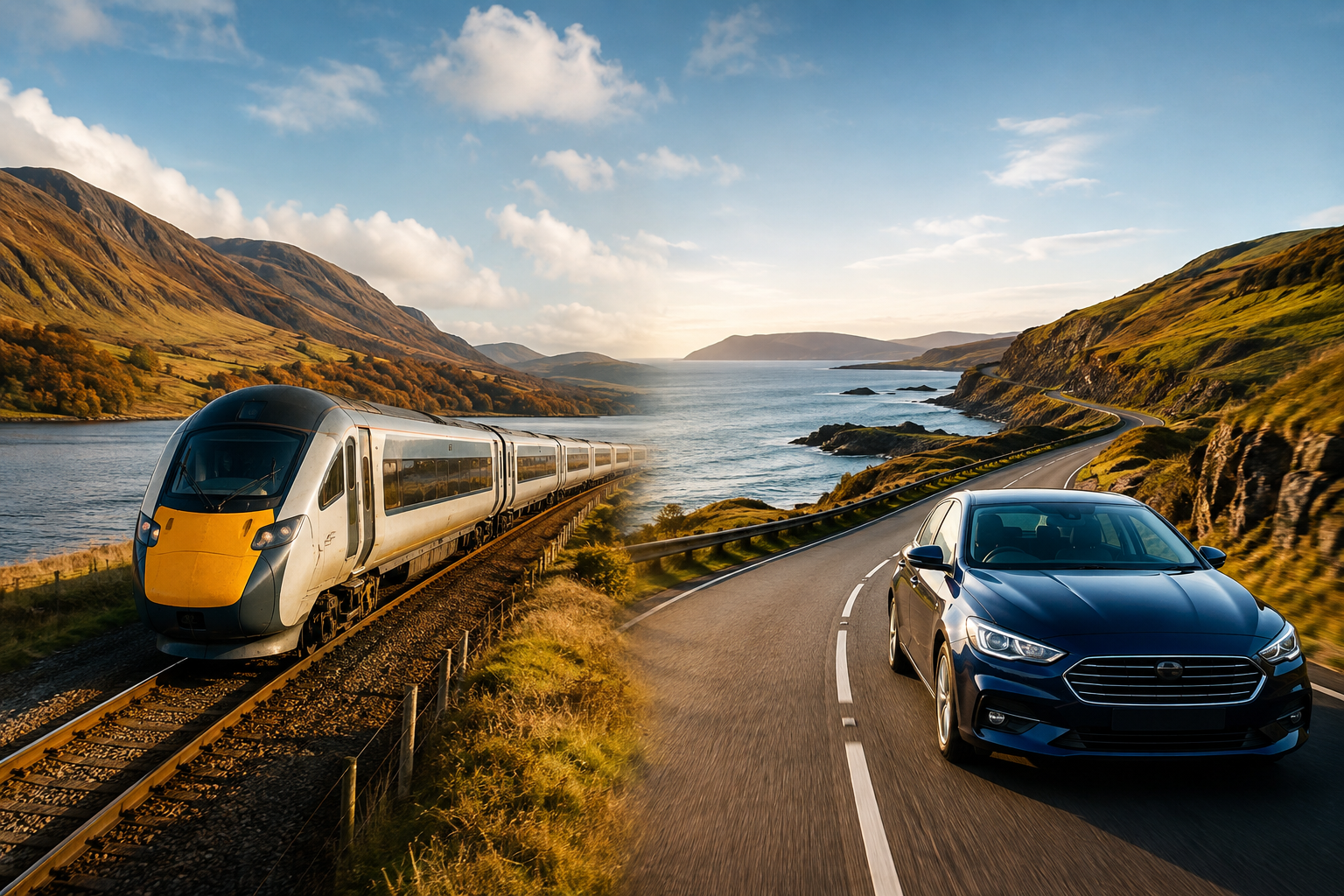
Choosing how to get around can have a major effect on the comfort, cost and flexibility of a holiday. For some travellers, public transport offers a convenient way to move between cities without worrying about parking or driving. For others, having a rental car provides the freedom to explore rural areas, make spontaneous stops and travel on their own schedule.
There is no universal answer to whether car rental or public transport is better. The right choice depends on your destination, itinerary, group size, budget and the type of experience you want.
This guide compares the two options and explains what to consider before deciding how to travel.
Car Rental vs Public Transport at a Glance
Both options have clear advantages and disadvantages.
Car rental may be better when you:
- Want to explore rural or remote destinations
- Are travelling with several people
- Have a lot of luggage
- Plan to visit multiple locations
- Want flexibility over departure times
- Are planning a road trip
- Need to reach accommodation away from major transport routes
Public transport may be better when you:
- Are staying mainly in large cities
- Want to avoid driving
- Prefer not to deal with parking
- Are travelling between major towns and cities
- Are travelling alone
- Want to use your journey time to relax or work
The best option may also be a combination of both. You could use trains or buses for a city stay and rent a car for a few days when you begin exploring the surrounding region.
Cost: Which Option Is Cheaper?
Cost is often one of the first considerations when comparing car rental with public transport.
However, looking only at the rental price or a single train ticket can give you an incomplete picture.
The Real Cost of Renting a Car
A rental car can involve more than the basic booking price. Depending on the provider and rental agreement, you may need to consider:
- Rental charges
- Fuel
- Insurance or protection
- Applicable excess
- Parking
- Tolls
- Additional drivers
- Optional equipment
- Additional fees
The exact costs depend on the provider, location, vehicle and booking conditions.
The Cost of Public Transport
Public transport costs can include:
- Train tickets
- Bus or coach fares
- Underground or metro fares
- Local transport
- Airport transfers
- Taxi or rideshare journeys for destinations away from stations
For a solo traveller staying in a major city, public transport can be particularly practical because there may be little reason to pay for a vehicle that spends much of the day parked.
For a family or group travelling between several destinations, however, comparing the total cost of individual tickets against a rental car may produce a different result.
Convenience and Flexibility
One of the biggest advantages of car rental is flexibility.
With your own rental vehicle, you can generally choose when to leave, where to stop and how long to spend at each destination, subject to the rental agreement and local driving rules.
This can be particularly valuable during road trips.
For example, a countryside itinerary might include several small villages, viewpoints and attractions that are difficult to connect efficiently using public transport.
Public transport works differently. Your journey is usually organised around published timetables and routes.
That can be an advantage rather than a disadvantage if you prefer predictable travel and do not want to drive.
You can sit back, read, work or enjoy the scenery instead of concentrating on the road.
City Breaks: Public Transport Often Has the Advantage
For many city holidays, a rental car is not necessary.
Large cities often have extensive networks of buses, trains, trams or underground services. Driving through busy streets can also introduce challenges such as congestion, restricted areas and expensive parking.
If your accommodation and attractions are close to public transport, leaving the car behind may be the simpler option.
Before renting a vehicle for a city break, consider how much time you will actually spend driving.
If most of your itinerary consists of museums, restaurants, shops and attractions in the city centre, public transport or walking may be more convenient.
Road Trips: When Car Rental Makes More Sense
A road trip is one situation where renting a car can be particularly useful.
The ability to travel between destinations without repeatedly checking connections can make a multi-stop itinerary easier to manage.
UK road trips, for example, can combine cities with countryside, coastal areas and smaller towns.
A rental vehicle may be useful when:
- Your route includes several stops
- You are travelling through rural areas
- Public transport connections are limited
- You want flexibility over where you stop
- You are carrying camping or outdoor equipment
- You want to explore at your own pace
Before booking, think about the vehicle you actually need. A smaller car may be convenient for narrow roads and towns, while a larger vehicle may provide more space for passengers and luggage.
Airport Travel: Car Rental or Public Transport?
Airport journeys can work well with either option.
Public transport may be convenient when the airport has a direct train, bus or coach connection to your destination.
Car rental may make more sense when your final destination is outside a major city or when you plan to continue travelling around the region.
Airport car hire can also save you from arranging several separate transfers during a multi-destination holiday.
However, check the rental collection arrangements carefully. Rental locations, opening hours, vehicle availability and additional charges can vary.
Travelling With Children or a Group
The size of your travelling party can influence the decision considerably.
For a larger group, travelling by public transport may require coordinating several tickets and managing luggage between different connections.
A rental car can keep everyone together and provide direct travel between destinations.
Families should also consider child-seat requirements and the amount of luggage they expect to carry.
On the other hand, public transport can allow adults to focus on their children rather than concentrating on driving.
The best option depends on the ages of the passengers, journey length and destination.
Luggage: An Often-Overlooked Factor
Luggage can make a significant difference to your travel experience.
Moving several suitcases between trains, buses and accommodation can be tiring, especially when changing services.
A rental car provides a dedicated space for your belongings, although you still need to choose a vehicle with sufficient luggage capacity.
Do not rely solely on the number of seats when selecting a rental vehicle. Different vehicles can have very different boot capacities.
If you are travelling with several passengers and large suitcases, check the vehicle category and luggage requirements before booking.
Driving vs Letting Someone Else Do the Work
Another important consideration is how you want to spend your travel time.
Driving requires concentration. You need to follow road signs, monitor traffic, find parking and remain alert throughout the journey.
Public transport removes much of this responsibility.
During a train journey, for example, you can read a guidebook, catch up on work or simply enjoy the scenery.
For travellers who enjoy driving, however, the journey itself can be part of the holiday.
A scenic road through the countryside can provide an experience that is difficult to replicate from a train or bus.
Considering Europcar for a Rental Car
If you decide that renting a car is the better option for your trip, Europcar is one provider you may wish to consider when comparing available rental options.
The important thing is to compare the complete rental conditions rather than focusing only on the headline price.
Before booking, review the vehicle category, collection location, rental duration, mileage conditions, fuel policy, insurance arrangements and any applicable charges.
Availability and terms can vary according to the location and booking, so travellers should check the provider’s current information and terms and conditions before making a reservation.
Check current car hire options and availability.
You can also compare different providers to find a rental arrangement that matches your itinerary and requirements.
When Public Transport Is the Better Choice
Public transport can be the smarter choice when your trip is primarily focused on cities or major tourist destinations.
It may be particularly suitable if:
- You are travelling alone
- You do not enjoy driving
- Your destinations have good transport connections
- Parking is difficult or expensive
- You plan to stay in one city
- You want to reduce the responsibilities associated with driving
It can also be a more relaxing option for long journeys when you would rather not concentrate on the road.
When a Rental Car Is the Better Choice
Car rental can be particularly useful when flexibility is important.
Consider renting if:
- Your itinerary covers several destinations
- You are visiting rural areas
- You are planning a road trip
- You are travelling with several people
- You have substantial luggage
- Public transport does not reach your accommodation conveniently
- You want to make spontaneous stops
Before booking, make sure you understand the rental conditions and that you are comfortable driving in the destination.
The Hybrid Option: Use Both
You do not have to choose one method for your entire holiday.
A combination of public transport and car rental can provide the advantages of both.
For example, you could:
- Arrive in a major city by train.
- Spend several days exploring without a car.
- Travel to a rental location outside the city.
- Collect a car.
- Explore rural destinations by road.
- Return the vehicle before travelling home by public transport.
This approach can reduce the amount of time you have a vehicle sitting unused while still giving you flexibility when you need it.
Questions to Ask Before Deciding
Before choosing between car rental and public transport, consider these questions:
Where am I travelling?
A city-based itinerary may favour public transport, while rural travel may favour a car.
How many people are travelling?
Group size can influence the overall cost and convenience of both options.
How much luggage do I have?
Several large bags can make frequent public transport connections less convenient.
Do I want flexibility?
A car provides greater control over your departure times and stops.
Am I comfortable driving?
Consider road conditions, traffic and local driving rules.
What is the total cost?
Compare the complete cost rather than just the advertised rental rate or individual ticket price.
Frequently Asked Questions
Is car rental cheaper than public transport?
It depends on the trip. The number of travellers, distance, vehicle type, fuel, parking and public transport fares can all affect the final cost. Compare the total expenses for your specific itinerary.
Is public transport better for city holidays?
Often, yes. Major cities may have extensive public transport networks, and avoiding parking and city-centre driving can make a trip easier.
Is renting a car better for a road trip?
A rental car can provide greater flexibility for road trips, particularly when visiting multiple destinations or rural areas with limited public transport.
Should I rent a car at the airport?
Airport car hire can be convenient, particularly if you plan to explore beyond the city. However, compare collection locations, rental conditions and the total cost before booking.
Can I combine car rental with public transport?
Yes. Using public transport for city travel and a rental car for rural or multi-stop travel can be an efficient approach.
What should I consider when comparing rental cars?
Look at the complete rental conditions, including vehicle size, luggage capacity, fuel policy, mileage, insurance arrangements, collection location and applicable fees.
Is public transport better for solo travellers?
It can be, particularly in destinations with good transport networks. However, a rental car may be more practical for rural itineraries or destinations with limited connections.
What is the most important car rental advice for first-time renters?
Read the rental terms carefully before booking, make sure you understand the insurance and excess arrangements, check the vehicle condition at collection and confirm the return procedure.
Final Thoughts
The choice between car rental and public transport ultimately depends on the type of trip you are planning.
Public transport can be convenient, relaxing and practical for city breaks and journeys between well-connected destinations. A rental car can offer greater freedom for road trips, rural travel, family holidays and multi-stop itineraries.
There is also no reason to choose only one. Combining public transport with car hire can give you the best of both approaches.
Before booking, consider your itinerary, group size, luggage, driving preferences and total travel costs. Most importantly, compare the complete conditions rather than making a decision based solely on the cheapest advertised price.
Affiliate Disclosure
Some links on this website may be affiliate links. If you make a booking through one of these links, we may receive a commission at no additional cost to you.
Rental prices, availability, policies, insurance arrangements and other conditions can change. Always check the latest information and the rental provider’s current terms and conditions before making a booking.