


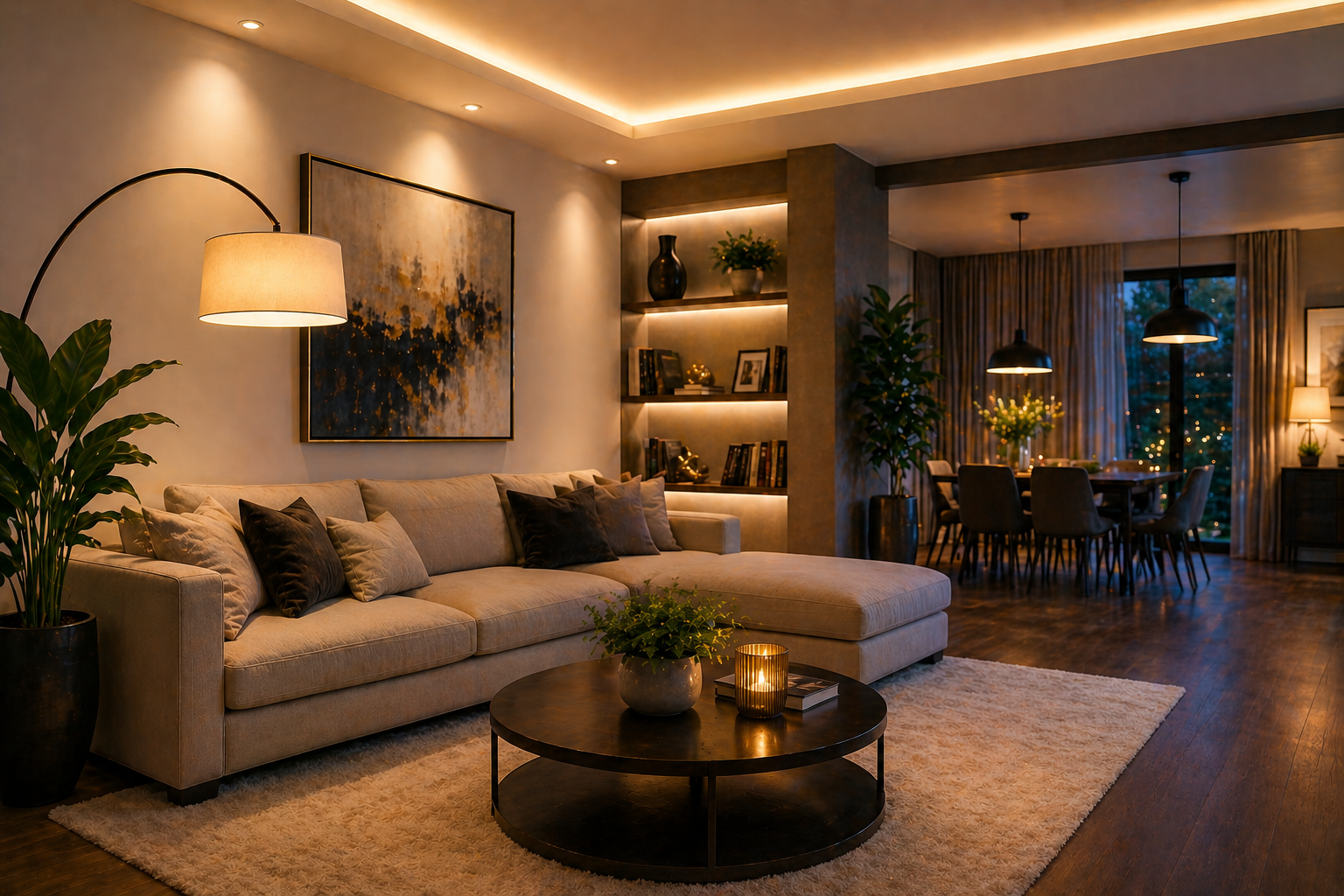
Lighting does more than just illuminate your home—it shapes mood, enhances design, and even impacts your daily routine. But in 2026, homeowners face a big decision: Should you stick with traditional lighting or upgrade to smart lights?
The debate around Smart Lights vs Traditional Lighting isn’t just about technology—it’s about convenience, cost, efficiency, and lifestyle. In this detailed guide, we’ll break down both options so you can decide what truly fits your home and budget.
What Are Smart Lights?
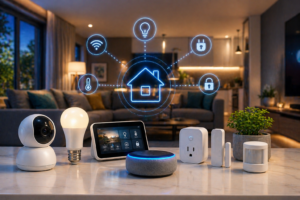
Smart lights are modern lighting solutions that connect to:
- Wi-Fi
- Bluetooth
- Smart home systems
You can control them using:
- Mobile apps
- Voice assistants
- Automation schedules
Key Features:
- Remote control
- Dimming and color changes
- Scheduling and automation
- Integration with smart home devices
What Is Traditional Lighting?
Traditional lighting refers to standard bulbs and fixtures that operate through:
- Manual switches
- Fixed brightness
- Limited customization
Common Types:
- Incandescent bulbs
- CFL (Compact Fluorescent Lamps)
- LED bulbs (non-smart)
Smart Lights vs Traditional Lighting: Key Differences
Let’s compare both side-by-side based on what actually matters.
💡 1. Convenience & Control
Smart Lights:
- Control from anywhere via smartphone
- Voice control with assistants
- Automated schedules (turn on/off automatically)
Traditional Lighting:
- Manual operation only
- No remote or automation
👉 Winner: Smart Lights
They offer unmatched convenience and flexibility.
⚡ 2. Energy Efficiency
Smart Lights:
- Often use LED technology
- Can be programmed to turn off when not needed
- Reduce energy waste
Traditional Lighting:
- LED versions are efficient
- But no automation → higher chance of waste
👉 Winner: Smart Lights (slightly)
Automation gives them an edge.
💰 3. Cost Comparison
Smart Lights:
- Higher upfront cost
- Additional cost for smart hubs (in some cases)
Traditional Lighting:
- Low initial cost
- Widely available and affordable
👉 Winner: Traditional Lighting (initial cost)
But long-term savings may favor smart lights.
🎨 4. Customization & Ambience
Smart Lights:
- Change colors (RGB lighting)
- Adjust brightness
- Set moods (reading, relaxing, party)
Traditional Lighting:
- Fixed color and brightness
- Limited customization
👉 Winner: Smart Lights
Perfect for modern and aesthetic homes.
🛠️ 5. Installation & Setup
Smart Lights:
- Easy for basic bulbs
- Advanced setups may require apps or hubs
Traditional Lighting:
- Plug-and-play simplicity
- No setup required
👉 Winner: Traditional Lighting
Simple and beginner-friendly.
🔒 6. Reliability
Smart Lights:
- Depend on internet or connectivity
- App issues can affect control
Traditional Lighting:
- Always works with a switch
- No tech dependency
👉 Winner: Traditional Lighting
More reliable in all situations.
Real-World Use Cases
Let’s make this practical.
🏡 Living Room
- Smart lights create mood lighting for:
- Movies
- Relaxation
- Guests
👉 Adds a premium feel
🛏️ Bedroom
- Smart lights can:
- Dim automatically at night
- Turn off after sleep
👉 Improves comfort and routine
🚪 Entry & Outdoor
- Traditional lights are often preferred:
- Simpler
- Reliable
🧑💻 Workspaces
- Smart lighting helps:
- Adjust brightness
- Reduce eye strain
Step-by-Step: How to Choose the Right Option
Step 1: Identify Your Needs
Ask:
- Do I want convenience?
- Do I need automation?
Step 2: Set Your Budget
- Low budget → traditional
- Flexible budget → smart lighting
Step 3: Start Small
Try smart lights in:
- Bedroom
- Living room
Step 4: Mix Both (Best Strategy)
👉 Combine:
- Smart lights for main areas
- Traditional lights for utility areas
Pros and Cons Summary
Smart Lights
Pros:
- Advanced control
- Energy-saving features
- Modern aesthetics
Cons:
- Higher cost
- Requires setup
- Tech dependency
Traditional Lighting
Pros:
- Affordable
- Easy to use
- Reliable
Cons:
- No customization
- No automation
Future of Home Lighting
Smart lighting is growing rapidly in 2026 due to:
- Smart home adoption
- Energy efficiency awareness
- Design-focused living
However, traditional lighting remains relevant for:
- Simplicity
- Budget-friendly setups
👉 The future is likely a hybrid approach
Conclusion: Which One Should You Choose?
When it comes to Smart Lights vs Traditional Lighting: Real Comparison, the best choice depends on your lifestyle.
- Choose smart lights if you want convenience, control, and modern aesthetics
- Choose traditional lighting if you prefer simplicity and lower cost
🚀 Final Takeaway:
You don’t have to choose one—combine both for the best results.
Start with smart lighting in key areas and expand gradually.
FAQs
1. Are smart lights worth the money?
Yes, especially for convenience, automation, and energy savings over time.
2. Do smart lights work without internet?
Some work via Bluetooth, but full features usually require internet.
3. Can I mix smart and traditional lighting?
Yes, it’s actually the best approach for most homes.
4. Do smart lights increase electricity bills?
No, they often reduce energy usage due to automation.
5. Are smart lights difficult to install?
Basic smart bulbs are easy to install, similar to regular bulbs.