



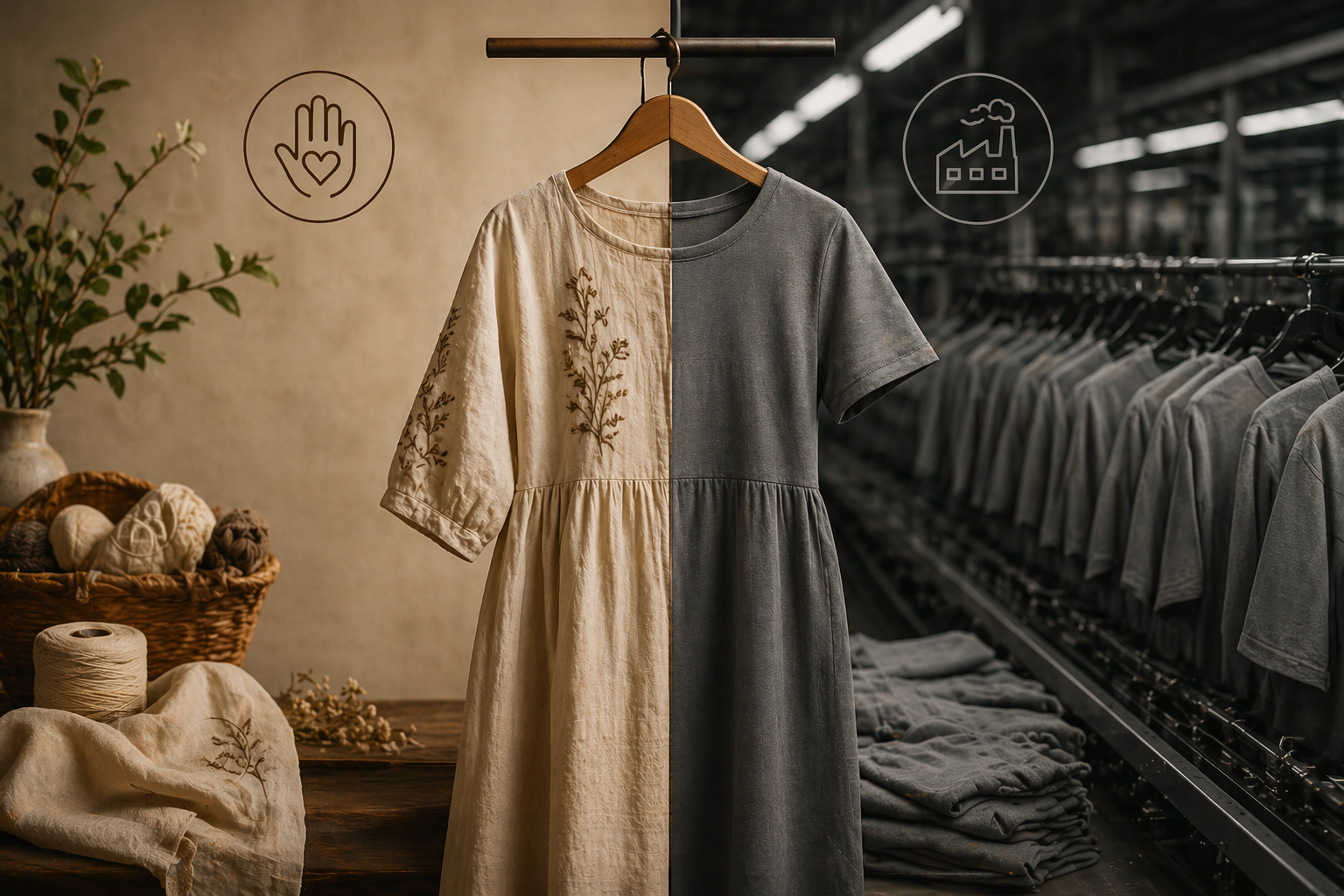
In today’s fast-paced fashion industry, mass production dominates the market with speed, affordability, and accessibility. However, handmade fashion continues to hold a distinct and enduring value that goes far beyond price or convenience. It represents craftsmanship, cultural depth, and a more thoughtful approach to consumption.
Below are the key reasons why handmade fashion is considered more valuable than mass-produced clothing:
- Authenticity and Storytelling
Each handmade piece carries a narrative—reflecting the artisan’s skill, inspiration, and time. Unlike factory-made garments, these items often embody personal expression and cultural heritage. - Superior Craftsmanship
Handmade fashion prioritizes precision and attention to detail. Skilled artisans invest time in techniques that result in higher-quality construction, ensuring durability and refined finishing. - Exclusivity and Individuality
Handmade items are typically produced in limited quantities, making each piece unique. This exclusivity allows individuals to express their personal style without conforming to mass trends. - Cultural Preservation
Many handmade garments are rooted in traditional techniques passed down through generations. Supporting handmade fashion helps preserve these valuable cultural practices. - Sustainability and Environmental Responsibility
Handmade production operates on a smaller scale, reducing waste and minimizing environmental impact. It aligns closely with the principles of slow fashion and conscious consumption. - Ethical Production Practices
Unlike many mass-production systems, handmade fashion often ensures fair wages and safe working conditions, promoting a more ethical industry standard. - Higher Quality Materials
Artisans frequently select materials with greater care, prioritizing quality over cost efficiency. This contributes to the longevity and overall value of the garment. - Longevity and Durability
Due to superior construction and materials, handmade clothing tends to last longer, reducing the need for frequent replacement. - Emotional Value and Connection
Consumers often develop a stronger attachment to handmade items, as they represent effort, artistry, and intentional design. - Support for Small Businesses and Artisans
Purchasing handmade fashion directly contributes to independent creators and local economies, rather than large-scale corporations. - Reduced Overproduction
Handmade fashion typically follows a made-to-order or limited production model, helping to prevent excess inventory and waste. - Timeless Design Approach
Rather than chasing short-lived trends, handmade fashion often emphasizes classic, enduring styles that remain relevant over time. - Customization and Personalization
Many handmade pieces can be tailored to individual preferences, offering a level of personalization rarely found in mass production. - Transparency in Production
Handmade fashion provides greater visibility into how and where a product is made, fostering trust between the maker and the consumer. - Promotion of Conscious Consumerism
Choosing handmade encourages more mindful purchasing decisions, shifting focus from quantity to quality.
Conclusion
While mass production offers convenience and affordability, handmade fashion delivers unmatched value through craftsmanship, sustainability, and cultural significance. It is not merely about clothing—it is about preserving artistry, supporting ethical practices, and embracing a more meaningful relationship with what we wear.